Land Ownership
Ownership records should be reviewed to confirm the legal owner and identify any existing claims, disputes, mortgages or third-party rights.

India's transition towards clean and sustainable power is creating strong demand for well-located Renewable Energy Land. Solar parks, wind farms, energy-storage facilities and other renewable infrastructure projects require large, suitable and legally verified land parcels.
PIRPL assists renewable energy developers, investors, infrastructure companies and institutional buyers in identifying land that aligns with their technical, operational and project-development requirements.
Whether you are planning a utility-scale solar project, a wind energy installation or a coastal renewable-energy facility, our team can help you explore suitable land opportunities across strategic locations.
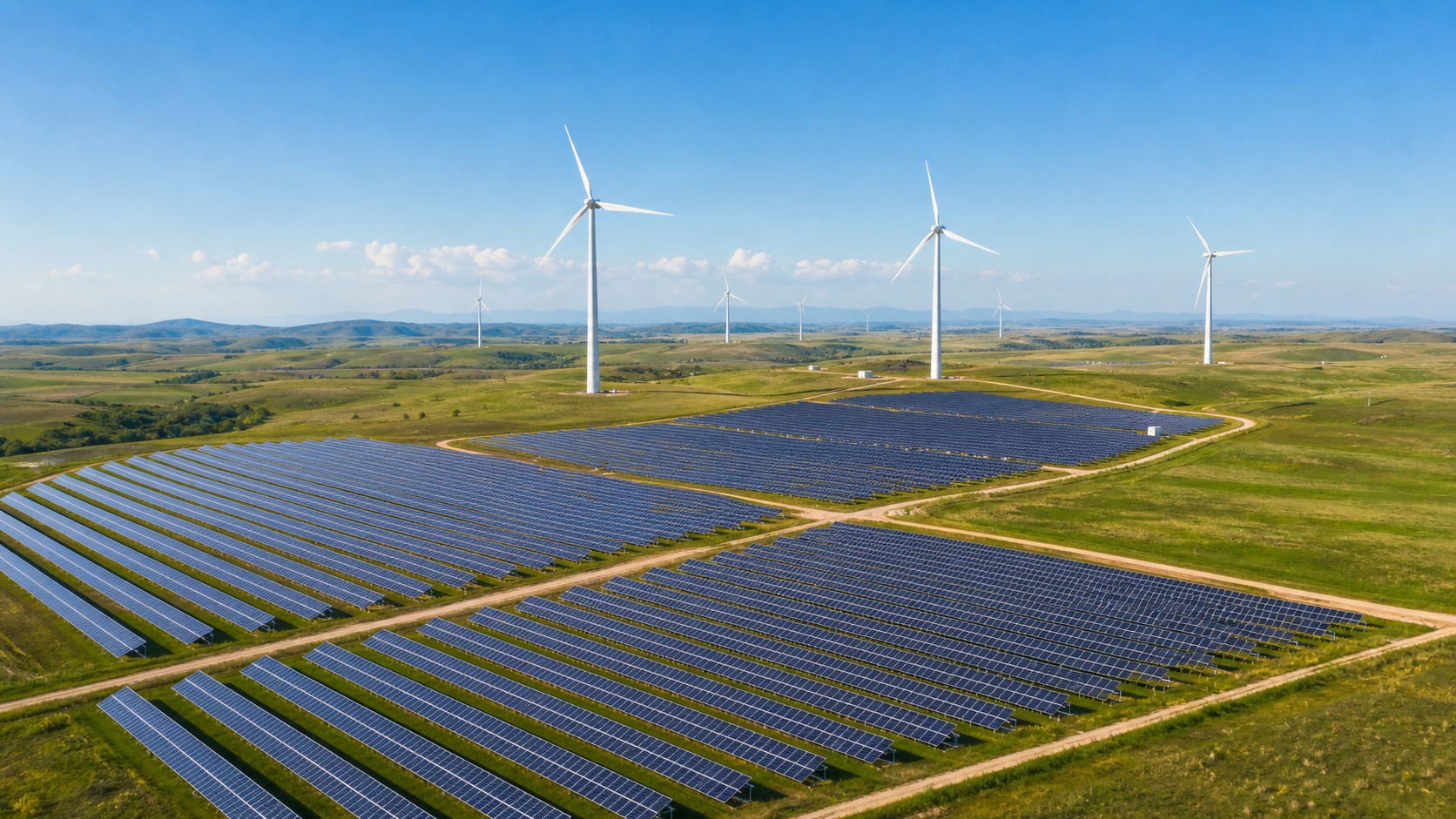
Selecting land for a renewable energy project involves more than identifying a large open parcel. The land must be assessed for its location, accessibility, terrain, ownership, zoning, transmission connectivity and environmental conditions. PIRPL's broader industrial land acquisition experience supports this structured evaluation.
We work to connect project developers with landowners and land partners while supporting a structured land identification and evaluation process.
Large-scale solar projects require open land with strong sunlight exposure, suitable terrain and minimum obstruction from surrounding buildings, trees or hills.
PIRPL helps developers identify Solar Energy Land for solar farms, utility-scale solar parks and captive solar power installations.
Suitable land for a solar project may require:
Every solar project has different technical and capacity requirements. The final land selection should therefore be completed after technical, legal and commercial evaluation.
Wind energy projects require locations with consistent wind flow, appropriate elevation and sufficient space between individual wind turbines.
Our team assists developers and investors in exploring Wind Energy Land in areas that may be suitable for wind power generation and supporting infrastructure.
Land for wind energy projects may be evaluated based on:
Wind-resource assessment and technical feasibility studies should be undertaken before finalising any wind energy land parcel.
Tidal energy uses the movement of ocean tides to generate power. These projects are generally associated with coastal areas, estuaries, tidal basins and locations experiencing predictable tidal movement.
PIRPL can support the preliminary identification of Tidal Energy Land and coastal parcels for renewable-energy infrastructure, subject to technical feasibility and applicable government approvals.
A tidal energy location may need evaluation for:
Tidal energy projects require specialised engineering studies, environmental assessments and approvals from the relevant authorities before development.
Hybrid energy projects combine two or more power-generation or energy-storage technologies within a single development.
A hybrid project may require additional land for battery storage units, substations, internal roads, safety zones, control centres and future expansion. Projects needing industrial operations support can also explore our factory development services.
PIRPL can assist in identifying land parcels that provide sufficient flexibility for integrated renewable-energy development.
Before purchasing or leasing land for a renewable energy project, developers should conduct detailed due diligence.
Ownership records should be reviewed to confirm the legal owner and identify any existing claims, disputes, mortgages or third-party rights.
The existing land-use classification must be checked to determine whether the proposed renewable-energy activity is permitted or whether land-use conversion is required.
The distance from transmission lines, substations and power evacuation infrastructure can significantly affect project feasibility and development costs.
The land should have suitable access for construction vehicles, cranes, solar modules, turbine components and maintenance teams.
Topographical and geotechnical studies may be required to understand grading, drainage, foundation and construction requirements.
The parcel should be reviewed for forest boundaries, wildlife zones, wetlands, water bodies, coastal regulations and other environmental restrictions.
Seasonal drainage patterns, flood history and waterlogging risks should be assessed before project planning.
Large renewable-energy projects generally benefit from contiguous land ownership, as fragmented parcels may create access, documentation and execution challenges.
PIRPL offers structured support throughout the land identification process.
We understand the project's preferred location, required area, energy type, grid-connectivity needs, access requirements and commercial expectations.
Our land network helps us identify potential parcels suitable for solar, wind, hybrid and other clean-energy projects.
Available parcels may be screened based on location, access, ownership information, zoning, surrounding development and project suitability.
We coordinate with landowners and relevant professionals to collect available ownership documents and land records for further review.
Our team can assist in arranging site visits for developers, technical consultants, surveyors and authorised representatives.
We help facilitate structured communication between project developers, investors, landowners and authorised land partners.
We support coordination between the relevant parties during the commercial discussion, documentation and transaction process.
Our services are suitable for:
We work with landowners, brokers and land partners across multiple locations to identify suitable large-parcel opportunities.
We focus on the specific requirements of each project rather than sharing unrelated land listings.
Our network includes opportunities ranging from smaller captive-power sites to large parcels for utility-scale energy development.
We help maintain clear communication between developers, landowners, consultants and other parties involved in the transaction.
Our team assists with the collection and coordination of available land records for professional legal and technical review.
Project requirements and landowner information are handled through a structured and professional process.
Maharashtra offers opportunities for solar, wind, hybrid energy and supporting power infrastructure because of its industrial base, diverse geography, large land belts and growing demand for sustainable energy.
PIRPL can assist developers in exploring renewable energy land opportunities across selected areas of:
The suitability of each location depends on the project type, renewable resource availability, land classification, grid infrastructure and applicable permissions.
Whether you require Solar Energy Land, Wind Energy Land, Tidal Energy Land or a large parcel for a hybrid renewable-energy project, PIRPL can assist you in exploring suitable land opportunities.
Share your preferred location, required land area, project type and connectivity requirements with our team, or visit our contact page to connect directly.
Renewable energy land is land identified for clean-energy infrastructure such as solar farms, wind farms, battery-storage facilities, hybrid energy parks and tidal energy projects.
The required area depends on the proposed power capacity, technology, panel layout, terrain, internal roads, substations and supporting infrastructure. A technical consultant should calculate the exact requirement.
This depends on state land laws, local zoning regulations and the approvals applicable to the proposed project. Legal and technical verification should be completed before purchasing or leasing agricultural land.
Wind energy land generally requires good wind potential, open surroundings, suitable elevation, road access and sufficient space for turbine installation and maintenance.
Coastal or waterfront land may be relevant for tidal energy infrastructure, but technical feasibility, environmental studies, marine conditions and coastal approvals must be evaluated.
Both purchase and long-term lease structures may be considered. The appropriate structure depends on project investment, ownership preference, financing conditions, landowner expectations and applicable regulations.
PIRPL assists with land identification and transaction coordination. Final title verification, technical feasibility, environmental assessment and statutory approvals should be completed by authorised legal, engineering and government professionals.